



New York Dispensaries Are Selling Less Per Store. So Why Are Wholesale Orders Rising
New York’s cannabis market is going through a reshuffle. New retail data from Lit Alerts shows the average dispensary is bringing in less revenue than it did at the start of the year, with the state’s biggest stores taking the hardest hit.
But on the wholesale side, LeafLink is seeing the opposite. Orders placed through LeafLink in New York more than doubled between February and September 2026. So which is it: is the market slowing down, or speeding up? The answer, it turns out, is both.
What the retail data shows
In the study, Lit Alerts compared average monthly revenue for New York dispensaries in February and September 2026, splitting stores into ten tiers by sales. The top tier fell hardest, from about $1.77 million a month to $918,000, a drop of roughly 48%. Most of the market followed the same direction, while the bottom two tiers saw small gains.
Lit Alerts calls this a compression. As more licenses open and stores spread across the state, shoppers choose the dispensary closest to them instead of traveling to a flagship. The pie is being cut into more slices, and each store’s slice is getting smaller.
What the wholesale data shows
LeafLink data tells a different story. Across the same February to September window, wholesale orders placed by New York retailers more than doubled, from 926 to 1,931.
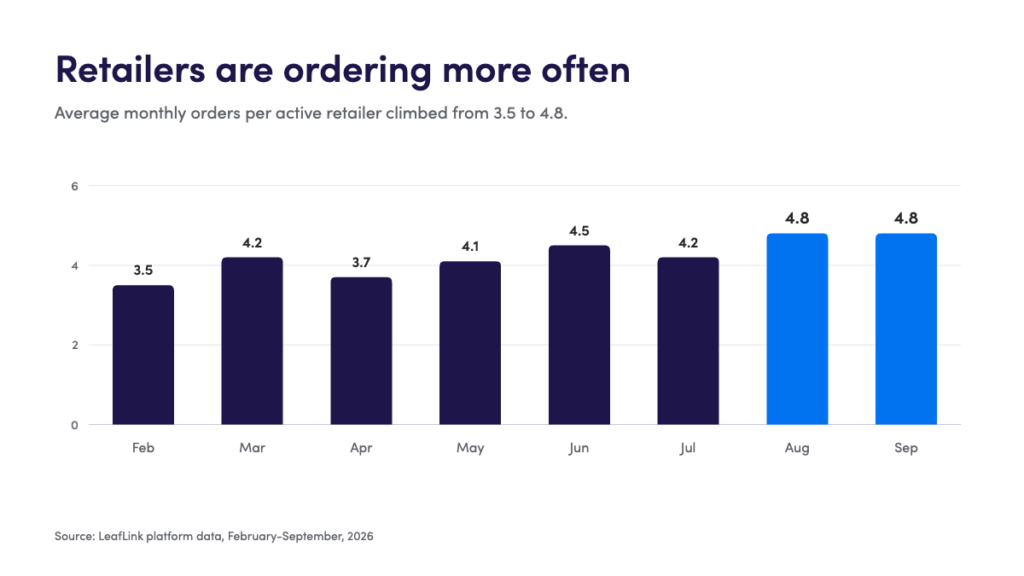
A fair question is whether that’s just more stores and brands joining the platform. Active retailers did grow, from 266 to 402, about 51%. But orders grew more than twice as fast, so the average retailer went from about 3.5 orders a month to 4.8, up roughly 38%. Even per seller, orders rose about 70%.
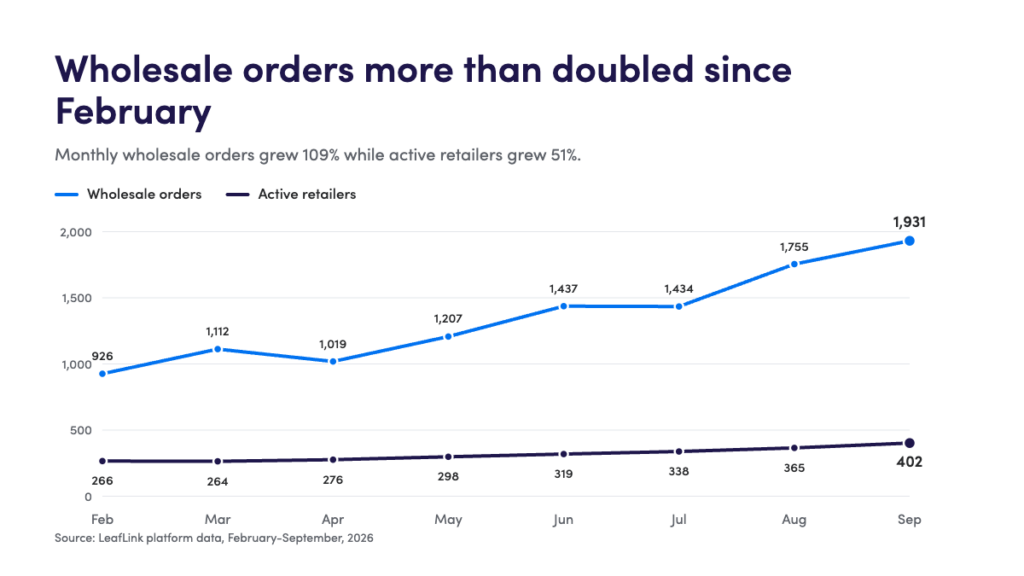
Orders dipped in April and held flat in July, but the overall trend is clearly upward. Retailer growth has picked up speed too, rising every month since April and hitting its fastest pace in September. More stores are ordering, and each one is ordering more.
Why both can be true
Retail revenue per store and total wholesale orders measure different things. As New York adds new dispensaries, each existing store may sell less, but every new store is another account placing orders.
Smaller stores with tighter budgets also tend to restock more often rather than carrying deep inventory. That means more orders flowing through the supply chain, even when each store’s sales are flat or falling. The market isn’t shrinking. It’s spreading out, and both Lit Alerts and LeafLink data show it.
What it means for brands
A market with more, smaller stores is a bigger opportunity, but it’s also more work. Brands that once relied on a handful of high-volume accounts now need to reach, sell to, and manage orders for far more retailers, often placing smaller and more frequent orders.
The brands that win in this phase of New York’s market will be the ones that make wholesale easy: staying in front of new stores as they open, keeping reorders simple and managing a growing book of accounts without adding headcount. That’s exactly the problem LeafLink is built to solve.
Are you a New York retailer? Sign up for a free LeafLink account here.
Data note: Wholesale figures reflect orders placed by New York retailers through LeafLink from February to September 2026. Retail figures are from Lit Alerts’ September 2026 analysis.